
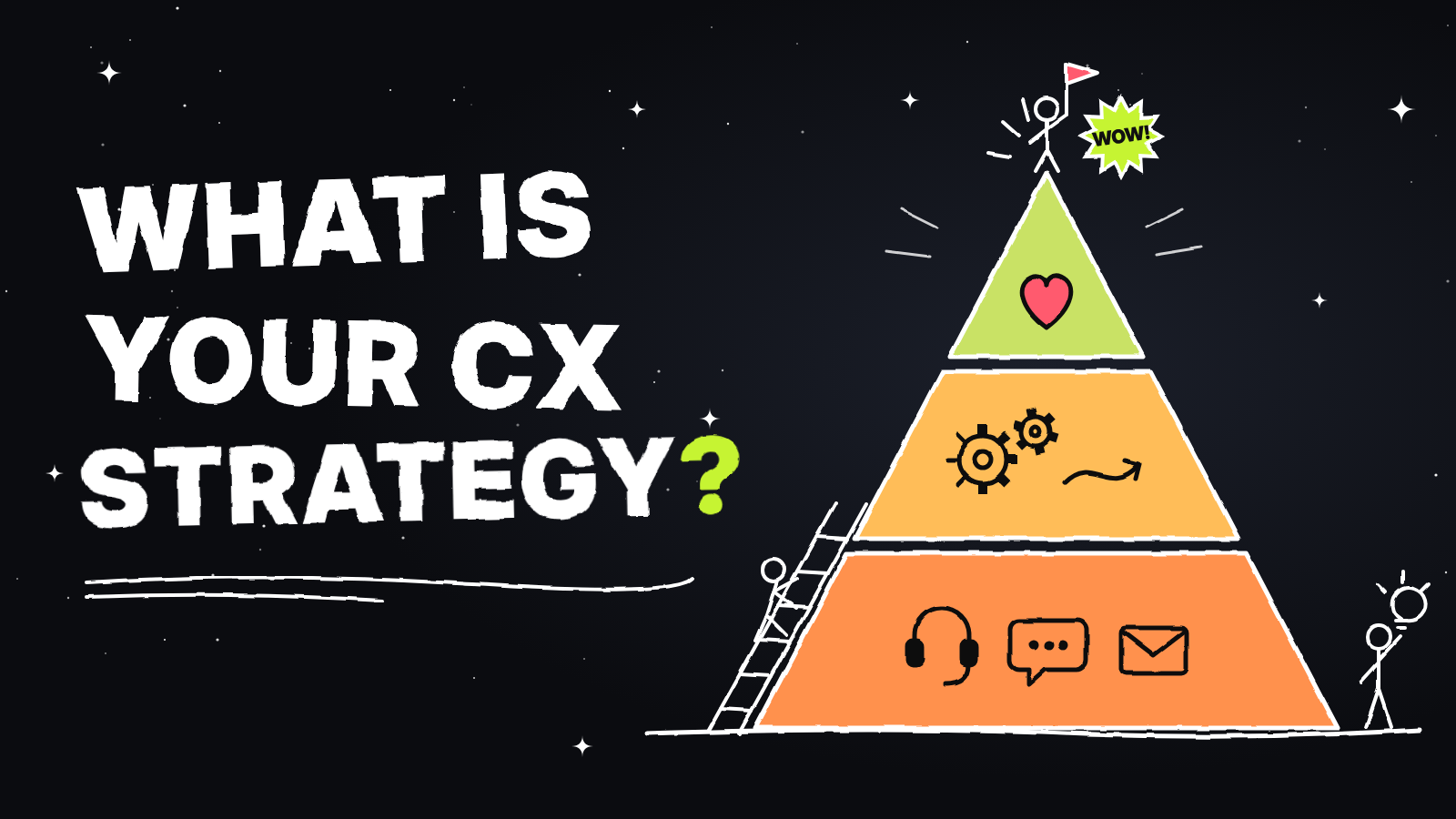
Most companies agree that their most important asset is their “customers”, and never miss a chance to say they put customer satisfaction at the heart of the business. Yet when it comes to defining a “flawless customer experience”, companies are confused. Some see it as setting up a 24/7, easy-to-reach customer service department. Others think delivering a flawless experience means running WOW actions — efforts to exceed customer expectations — before their core processes are even in place. There is no single recipe for every company, but once a company identifies where it stands on the road to a flawless experience, applying the right strategy is quite straightforward.
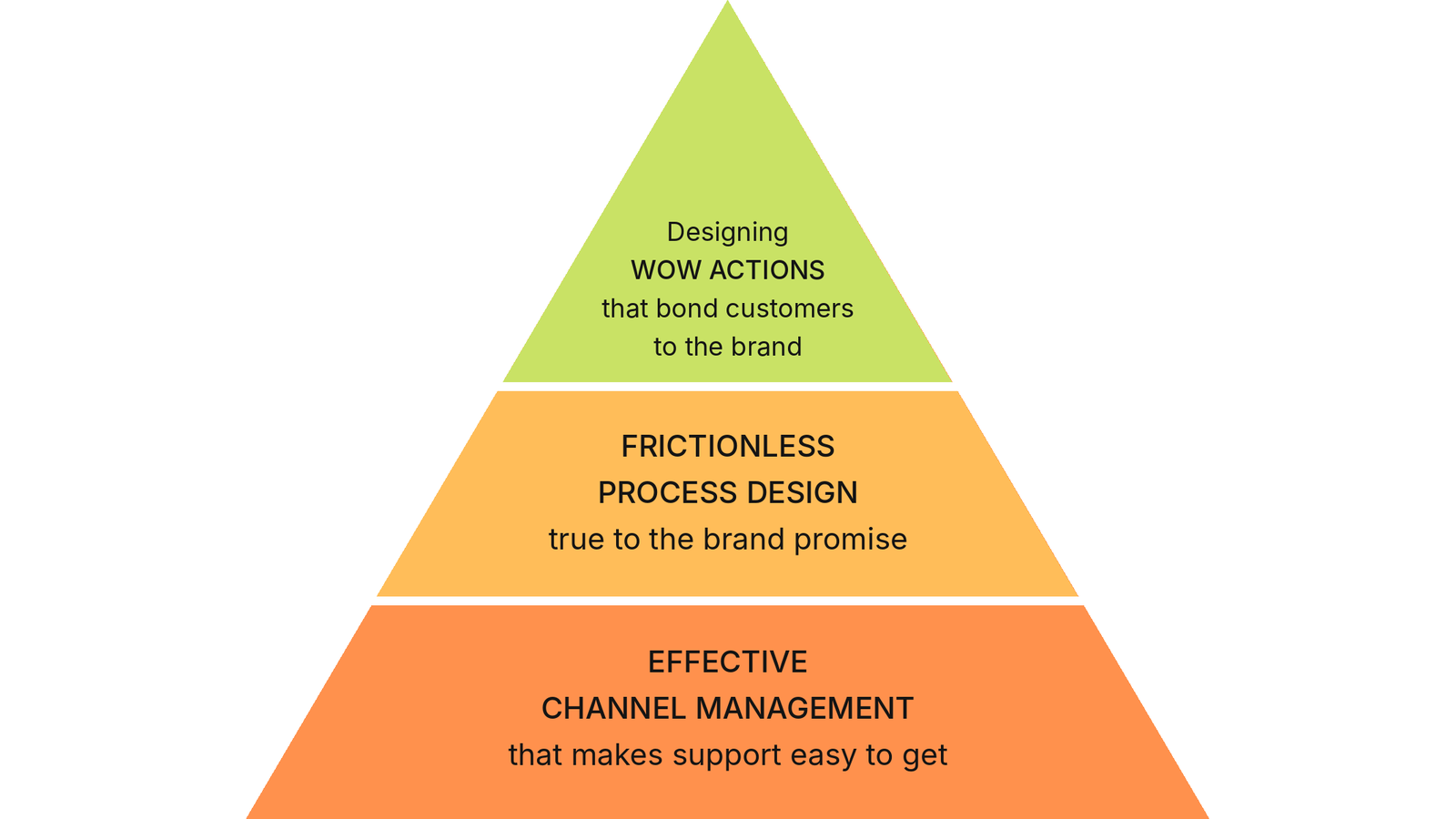
The CX pyramid that Gartner first published in 2018 and detailed in its 2019 article “Create Powerful Customer Experiences” can be a good guide for companies that are new to customer experience or feel they are not on the right track. The pyramid describes the path from effective channel management — the first stage of a flawless experience — all the way to WOW actions that help companies build an emotional bond with customers. Inspired by it, I created a simpler pyramid that I use to shape my CX strategy: I treat the road to a flawless experience as a process and follow the pyramid below along the way. Let’s look at its three layers in detail.
1. Manage Your Channels Effectively
An order process where everything goes right leads to repeat purchases, while a bad experience for a customer trying to reach customer service after even the smallest hiccup can spread by word of mouth and do lasting damage to your brand. Easy access to the information and help customers are looking for can be seen as the starting point of the pyramid. So, to make sure the base of the pyramid is solid, here is what to do:
-
Offer a communication channel that suits every customer segment. It matters to have the channels you need with age groups and education levels in mind. For example, if middle-aged and older customers make up a large share of your audience, a written channel alone won’t be enough. Or, if you already have a WhatsApp line, offering a separate messaging service can be confusing.
-
Deliver a similar experience across the channels you offer. If you offer both written and voice channels, the automated response systems customers meet before reaching a live agent should feel alike. You can build a version of the decision tree from your voice response system in your written channel too.
-
Your channels should be available at the right times, with reasonable wait times. Rather than a 24/7 customer service, it is more useful to build an operation that works when customer demand peaks and keeps customers on hold for a reasonable time.
-
Answer the basic questions customers are likely to have on your support page. Many brands neglect their support pages, assuming customers don’t like to read. But support pages that don’t drown customers in unnecessary detail and offer a good user experience can save customers from reaching out to live support.
-
Proactively inform customers at every necessary step of the service through channels like SMS and app notifications. Identify the questions and moments customers ask about most in your processes, and send notifications before customers have to reach out — for example, that an e-commerce order is being prepared and is on its way, or that the installation of a new appliance has been scheduled.
The goal of this layer of the pyramid is to support customers whenever they have a question, so that they recognize and accept the brand’s presence.
2. Design Frictionless Processes True to Your Brand Promise
To build a CX strategy that fits the brand, it is essential to understand the brand promise and to design the processes that deliver on it without friction. Before giving examples of how to do this, it is worth defining frictionless experience and talking about customer journey maps.
A frictionless experience is one where the pain points that could cause problems along the customer’s journey are anticipated and removed. For example, anticipating that you may forget your password while signing up to a site, and offering the solution on the same page, is an example of a frictionless experience.
The tool that can show you the pain points in your existing or potential customers’ interactions with your brand is the customer journey map, which visualizes your processes through the customer’s eyes. Visualizing your company’s core processes in journey maps for different customer personas makes it easier to spot these pain points and find solutions. Take a bank, for example: core processes such as a loan application or opening an account should be mapped separately for a few different personas — a university student, a retiree, a homemaker — showing how each channel (the banking app, the branch, etc.) affects the process.
Let’s look at a few examples of how to take the brand promise into account when designing your processes. Imagine an online grocery brand whose promise is “the fastest delivery”. Its target audience is people living in high-traffic cities who want to save time. Our main expectation from this brand is that it delivers what we bought, correctly and at the promised time. Bringing a missing item — and so costing us several times the time it saved us — would be one of the worst experiences. Designing every process and tool that ensures the right product is packed contributes to a frictionless experience.
From a business hotel that promises a quiet and comfortable stay, our basic expectations are comfortable beds, blackout curtains, a clean room and breakfast. A hotel that can’t deliver these but offers live music and entertainment at dinner should rethink its guest experience.
A retailer that guarantees the lowest price every day should learn to track market prices as well as possible before designing the loyalty programs it offers customers.
So the goal of the second layer of the pyramid is to design frictionless experiences true to the brand promise, so that customers can build a trouble-free relationship with the brand.
3. Bond Customers to Your Brand with WOW Actions
The HBR article “What’s the Right Customer Experience for Your Brand?”, published in 2021, discusses two different CX strategies: frictionless experience and memorable experience. Based on its research, it argues that brands can grow when frictionless and memorable experiences are applied as a combined strategy.
Let’s think about how to apply this combined strategy through an airline. The core promise of any airline is a frictionless journey, with the plane taking off on time. If flights complete their journeys on time, nothing during the flight raises safety concerns and there is no confusion over seat numbers, we can say the core processes are in place.
A company that has its core processes in place should, as a second step, organize its supporting processes. If customers are experiencing the journey without friction, the CX strategy needs to move on to designing in detail the “what if” processes — what happens if something goes wrong. In other words, when a flight is delayed, actions that still let your customers complete their journey happily should be on the agenda. It is important to define supporting processes such as informing customers about the delay at the best possible moment, being clear and precise about the new schedule, having ready and clear answers if passengers ask to cancel or postpone their tickets, and meeting passengers’ meal needs if the wait is at the airport.
The peak of the strategy is the stage where all processes are flawless and emotional actions are designed to bond customers to the brand. Continuing with our flight example, the brand giving a toy to a restless child on board, sending a travel guide before the flight, sharing rental car or accommodation options, reminding us to enable international roaming before a flight abroad, or offering international mobile packages are examples of actions that exceed customer expectations and push customers to choose the brand again and again. For a real example from the airline industry, look up the surprise WestJet prepared for its passengers at Christmas 2013, which they called WestJet Christmas Miracle – Real Time Giving.
The goal of the final layer of the pyramid is to give customers memorable moments that bring them back, and to grow our customer base by getting them to tell their friends about their good experiences.
It is widely accepted that delivering a flawless customer experience is a distinctive strength for brands. If it is correctly identified which layer of the CX pyramid each brand should focus on, a flawless customer experience will turn into a competitive advantage.
The customers you serve at the top layer of the pyramid are your brand ambassadors. As you climb toward the top, you will see customer experience turn into marketing power, and your customers become champions working for your brand.